Chandra Ashtakam (Chandra Stotra)
Eight verses from the Skanda Purana praising Lord Chandra (Moon), the mind-karaka in Vedic astrology. Recited on Mondays to calm emotional turbulence, strengthen mental peace, and remedy weak or afflicted Moon placements.
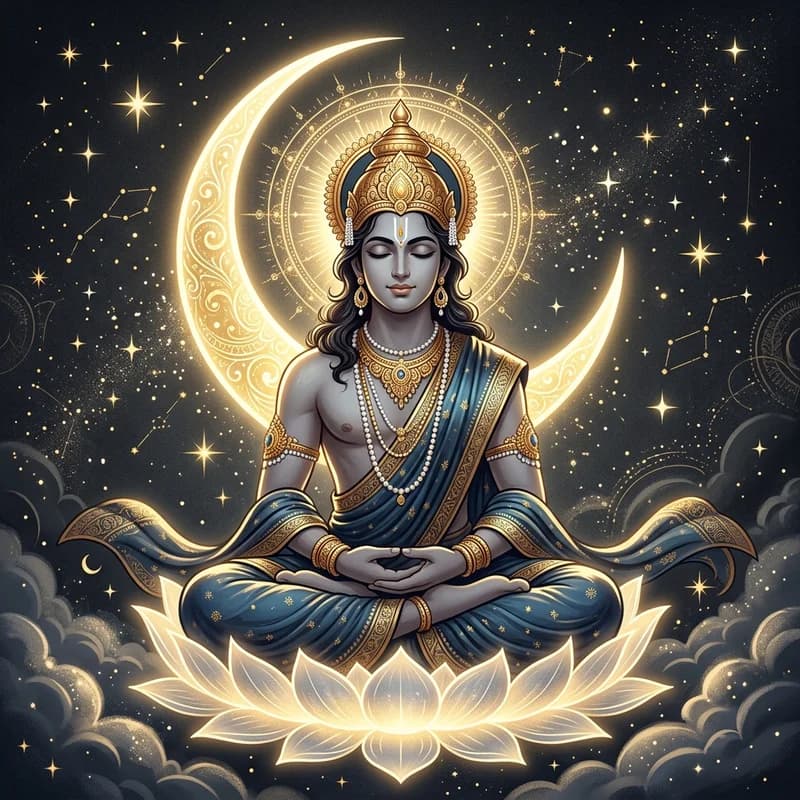
Chaupai 1
दधिशङ्खतुषाराभं क्षीरोदार्णवसम्भवम्। नमामि शशिनं सोमं शम्भोर्मुकुटभूषणम्॥
Dadhi-shankha-tusharabham kshirodarnava-sambhavam. Namami shashinam somam shambhor-mukuta-bhushanam.
White as curd, conch, and frost, born from the ocean of milk — I bow to Shashi, Soma, the crest-jewel of Shiva's crown.
Chaupai 2
श्वेताम्बरः श्वेतविभूषणश्च श्वेतद्युतिर्दण्डधरो द्विबाहुः। चन्द्रोऽमृतात्मा वरदः किरीटी मयि प्रसादं विदधातु देवः॥
Shvetambarah shveta-vibhushanashcha shveta-dyutir-danda-dharo dvibahuh. Chandro-amritatma varadah kiriti mayi prasadam vidadhatu devah.
Clad in white, adorned in white, white-radiant, staff-bearer, two-armed — may the nectar-souled, boon-giving, crowned Moon grant me grace.
Chaupai 3
सोमं शिवोत्तमं शान्तं शशाङ्कं शशभूषणम्। निशानाथं प्रपन्नानां प्रभुं वन्दे निशाकरम्॥
Somam shivottamam shantam shashankam shasha-bhushanam. Nishanatham prapannanam prabhum vande nishakaram.
I worship Soma, Shiva's best ornament, peaceful Shashanka, lord of the night who protects those who take refuge.
Chaupai 4
चन्द्रं मनोजवं दिव्यं निर्मलं विमलप्रभम्। मृगधारिणमिन्दुं च महातेजस्विनं प्रभुम्॥
Chandram manojavam divyam nirmalam vimala-prabham. Mriga-dharinam-indum cha mahatejasvinam prabhum.
Swift as thought, divine, pure, spotless-radiant — the deer-bearing Indu, the great-luminous Lord Moon.
Chaupai 5
रोहिणीशं सुधामूर्तिं सुधाकरमनामयम्। ओषधीशं सुधास्पर्शमचिन्त्यं वरदं भजे॥
Rohinisham sudha-murtim sudhakaram-anamayam. Oshadhisham sudha-sparsham achintyam varadam bhaje.
I worship Rohini's lord, nectar-formed, disease-free Sudhakara, lord of herbs, nectar-touching, inconceivable boon-giver.
Chaupai 6
तारानाथमव्यक्तं कलानिधिमनामयम्। चन्द्रं कलानिधिं वन्दे हृदयाब्जे व्यवस्थितम्॥
Tarana-natham-avyaktam kalanidhim-anamayam. Chandram kalanidhim vande hridayabje vyavasthitam.
Lord of stars, unmanifest, treasure of arts, disease-free — I worship Moon established in the lotus of my heart.
Chaupai 7
ग्लौरात्रिनाथं रजनीकरं तं कुमुद्वतीकान्तमनल्पतेजम्। कान्तिप्रदं सर्वजनप्रियं तं चन्द्रं नमामि प्रणवाभिरामम्॥
Glaur-atrinatham rajani-karam tam kumudvati-kantam-analpa-tejam. Kantipradam sarva-jana-priyam tam chandram namami pranavabhi-ramam.
Lord of Atri's daughter, night-maker, beloved of Kumudvati, not small in splendour — grace-giver, loved by all — I bow to the charming Moon.
Chaupai 8
अत्रेस्तनूजं विधुमम्बिकेशं कलानिधिं कामदमिन्दुमीड्यम्। यक्षाधिपं चन्द्रकलावतंसं चन्द्रं सदा शान्तमहं नमामि॥
Atres-tanujam vidhum-ambikesham kalanidhim kamadam-indum-idyam. Yakshadhipam chandra-kalavatan-sam chandram sada shantam-aham namami.
Atri's son, Vidhu, Ambikeshvara, treasure of arts, desire-fulfiller, praiseworthy Indu, lord of Yakshas, crescent-crowned — I ever bow to peaceful Chandra.
About Chandra Ashtakam
Chandra Ashtakam is one of the most revered devotional hymns in the Hindu tradition, dedicated to Lord Chandra (Moon). Recited by millions of devotees, it invokes divine grace, mental steadiness, and protection from negative influences.
- Planetary Remedy for Moon (Chandra): In Vedic astrology, this hymn is widely recommended during Moon (Chandra) Mahadasha, Antardasha, or challenging transits to harmonize planetary energy and reduce karmic pressure.
Benefits of Recitation
- Calms mind and emotional instability linked to weak Moon
- Removes Chandra dosha when chanted on Mondays
- Enhances beauty, charm, and mental clarity
- Supports relief from depression, anxiety, and eye ailments in tradition
Best Time and Method
Recite on Monday (Somvar) after evening moonrise or at dawn. Face the Moon when visible. Use a pearl or crystal mala. Best during Chandra Mahadasha or when Moon is afflicted in the birth chart.
Astrological Significance
Regular recitation aligns the mind with dharmic discipline — the foundation of all Vedic remedies. Pair this practice with honest conduct, seva (selfless service), and consistency rather than fear-based ritual alone.