
Combust Planets in Vedic Astrology: Effects, Remedies
Combust Planets in Vedic Astrology
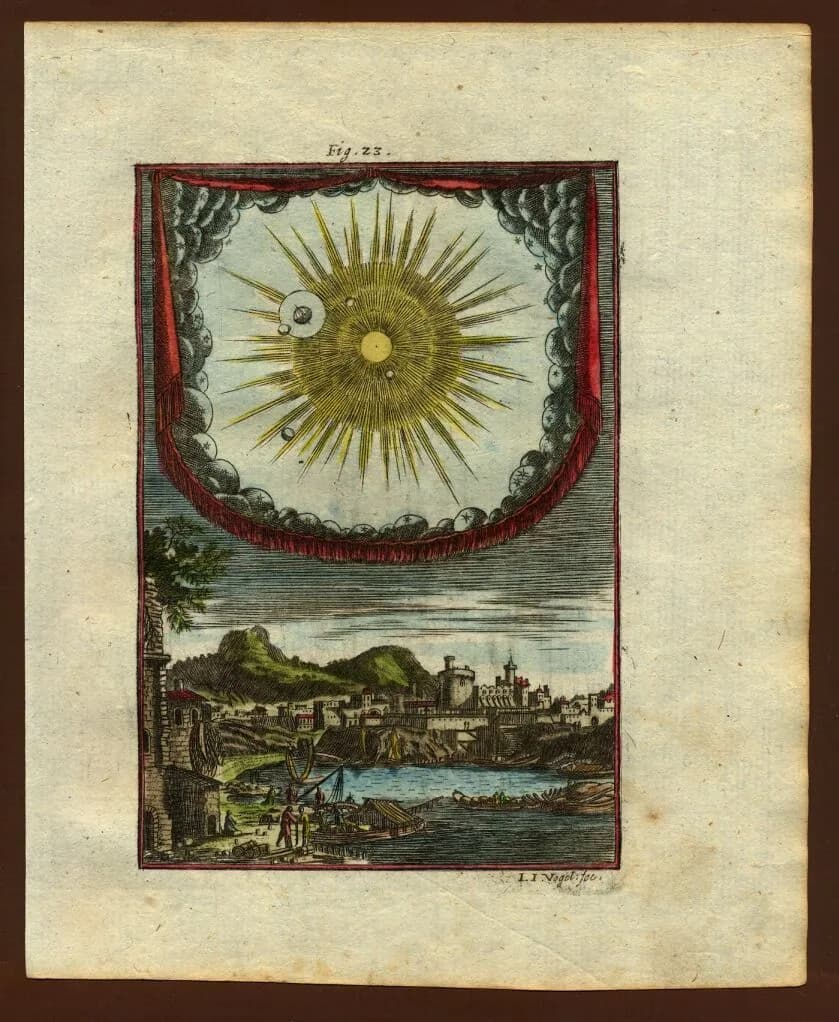
In astrology, combust means a planet sits so close to the Sun that it is lost in the Sun's glare; in Sanskrit this is called asta, and such a planet is an asta graha. Combustion in astrology is measured in degrees: each planet has its own limit, which you will find in the combustion degrees table below. The word asta means "set", as in a setting star. Seen from Earth, a planet near the Sun is lost in its glare and cannot be seen in the sky. Vedic astrology reads that invisibility symbolically: the planet's significations are present, but they struggle to show themselves in the outside world.
Combustion is one of the first things an astrologer checks when a planet looks strong on paper but does not seem to deliver. It is also one of the most over-feared. A combust planet is not a ruined planet, and how much combustion matters depends on how close the planet is to the Sun.
What combustion means in practice
The Sun represents the self, authority, ego and vitality. When another planet comes into its glare, the Sun's agenda overrides that planet's own. In practice, astrologers read three effects:
- The planet's themes become internal. A combust Mercury still thinks well, but the person may doubt their ideas or find their words overlooked.
- The houses it rules feel the strain. Combustion weakens a planet's ability to protect and deliver the matters of the houses it owns.
- Ego gets tangled with that planet's themes. A combust Venus can make relationships a question of self-worth, and a combust Jupiter can make beliefs a matter of pride.
Rahu and Ketu never become combust. They are calculated points, the lunar nodes, not physical bodies, so there is nothing for the Sun's glare to hide.
Combustion degrees: the limit for each planet
These are the limits most Vedic astrologers use. A planet within this many degrees of the Sun, measured by longitude on either side, is combust.
| Planet | Combust within (direct) | Combust within (retrograde) |
|---|---|---|
| Moon | 12° | Never retrograde |
| Mars | 17° | 17° |
| Mercury | 14° | 12° |
| Jupiter | 11° | 11° |
| Venus | 10° | 8° |
| Saturn | 15° | 15° |
For Mercury, the rule is easy to quote: Mercury is combust when it is within 14° of the Sun while direct, or within 12° while retrograde. Venus works the same way with 10° direct and 8° retrograde. These are the figures from the Surya Siddhanta tradition; a few modern astrologers use slightly different orbs.
Mercury and Venus have a smaller limit when retrograde because a retrograde Mercury or Venus is passing between the Earth and the Sun. It is closer to us and appears brighter, so it is harder to lose in the glare.
Mercury is never more than about 28° from the Sun, and Venus never more than about 47°, so both are combust far more often than the outer planets. A combust Mercury is very common and should not cause alarm on its own.
How to check combustion in your chart
Compare the Sun's position with the other planet's position as a total longitude, not just within the sign. Combustion works across sign boundaries.
A worked example
Suppose the Sun is at 20° Gemini, Mercury at 8° Gemini and Venus at 2° Cancer.
- Mercury: 20° minus 8° is 12°. Mercury is direct, and 12° is inside its 14° limit, so Mercury is combust.
- Venus: Venus is in the next sign. From 20° Gemini to 2° Cancer is 12° (10° to the end of Gemini, then 2° more). That is outside Venus's 10° limit, so Venus is not combust, even though it is close.
Most chart software, including our free kundli, marks combust planets for you. It is still worth checking, because some programs use slightly different limits.
How much does it matter?
Combustion is a matter of degree, not a yes-or-no switch. Judge it with these questions:
- How close is the planet? A planet 2° from the Sun is far more affected than one 13° away. Near the edge of the limit, the effect is mild.
- Is the planet strong otherwise? A combust planet in its own or exalted sign, or strong in the Navamsa chart, holds up much better.
- What does it rule? A combust Lagna lord matters more than a combust lord of a less important house.
- Is it the Sun's friend? Many astrologers find the Moon, Mars and Jupiter, which are friends of the Sun, cope with combustion better than Venus and Saturn, which are its enemies.
What about Cazimi?
You may read that a planet extremely close to the Sun, within about 17 minutes of arc, is "cazimi" and strengthened rather than weakened. That idea comes from the Persian and Western astrological traditions. It is not part of classical Parashari astrology, and Vedic astrologers differ on whether to use it. Treat it as an outside idea, not a Vedic rule.
Effects of combustion for each planet
These are traditional tendencies. Their strength depends on the closeness and the rest of the chart. Statements about health describe astrological themes only and are not medical advice. For any health concern, consult a qualified doctor.
Combust Moon
The Moon is combust around Amavasya, the new Moon, when it is within 12° of the Sun. The mind can feel dominated by duty, ego or a parent's expectations. Emotional needs may be pushed aside. People born at Amavasya often benefit from deliberate rest and emotional outlets.
Combust Mars
Courage and drive are present but can turn inward. Some people suppress anger until it bursts out. Others push themselves hard to prove a point to authority figures. Channelling Mars into physical activity and clear goals helps.
Combust Mercury in Vedic astrology
Very common. When Mercury is several degrees from the Sun, the Sun-Mercury combination (Budhaditya Yoga) can still give a sharp mind. When Mercury is very close, the person may struggle to listen, may be over-attached to their own opinions, or may feel their intelligence goes unrecognised. Writing things down and seeking feedback both help.
Combust Jupiter
Wisdom and faith are present but can become rigid, or the person may struggle to find a teacher they trust. Traditional texts also link Jupiter with children and, in a woman's chart, the husband, so those areas may need patience. Jupiter is combust for around a month each year when it passes behind the Sun.
Combust Venus
Love, comfort and art can become tied to self-worth. The person may feel undervalued in relationships or chase approval through them. Creative work may come in bursts. Since Venus is the main significator of marriage, check its strength in the Navamsa before drawing conclusions about relationships.
Combust Saturn
Work and duty can clash with authority figures, and effort may feel unrewarded for long stretches. Saturn rewards slow, steady discipline, and that remains the best response here.
Combustion and dasha periods
The Mahadasha or Antardasha of a combust planet often brings its themes forward as inner work: a career that grows slowly while the person builds skill, or relationships that teach self-respect. Results can come later in the period rather than at its start. See Vimshottari Dasha for how the periods are calculated.
Note that combustion is judged from the main birth chart (D1). It is not recalculated in divisional charts, though the planet's strength in the D9 shows how well the person handles it.
Remedies for combust planets
The traditional approach is to strengthen the combust planet gently and to respect the Sun rather than fight it.
Mantra
Chant the combust planet's beej mantra on its weekday, ideally 108 times:
- Moon: Om Shraam Shreem Shraum Sah Chandraya Namah (Monday)
- Mars: Om Kraam Kreem Kraum Sah Bhaumaya Namah (Tuesday)
- Mercury: Om Braam Breem Braum Sah Budhaya Namah (Wednesday)
- Jupiter: Om Graam Greem Graum Sah Gurave Namah (Thursday)
- Venus: Om Draam Dreem Draum Sah Shukraya Namah (Friday)
- Saturn: Om Praam Preem Praum Sah Shanaischaraya Namah (Saturday)
Honouring the Sun
Offering water to the rising Sun and reciting the Aditya Hridayam are traditional ways to bring the Sun's influence into balance.
Charity
Donate items associated with the combust planet on its weekday: green moong or books for Mercury, white rice or clothes for Venus, turmeric or chana dal for Jupiter, mustard oil or blankets for Saturn.
Gemstones: be careful
Astrologers disagree about gemstones for combust planets. Some say the stone revives a weak planet. Others say it adds fuel to the fire. Do not wear the gemstone of a combust planet without a full chart reading, and avoid it entirely if the planet rules the 6th, 8th or 12th house in your chart. Gemstones by planet covers how stones are chosen.
Bring this to your own chart
See how this plays out in your birth chart
This article covers the general pattern. A focused reading applies it to your exact placements, current dasha, and the question you actually have.
Book a consultationFrequently Asked Questions
Is a combust planet completely destroyed?
No. Its significations remain, but they find outward expression harder. How much it matters depends mainly on how close the planet is to the Sun and on its other strengths.
Which planet is most often combust?
Mercury, because it never moves more than about 28° from the Sun. Venus is the next most common.
At how many degrees is Mercury combust?
Mercury is combust within 14° of the Sun when direct and within 12° when retrograde. Measure the distance by total longitude, even if the Sun and Mercury are in different signs.
Can a planet be combust and retrograde at the same time?
Yes, Mercury and Venus can be. Their combustion limit is smaller when retrograde: 12° for Mercury and 8° for Venus.
Does combustion apply across two signs?
Yes. Combustion is measured by the actual distance in degrees from the Sun, so a planet in the next sign can still be combust if it is within the limit.
What happens in the dasha of a combust planet?
Its themes often turn inward before they show results outside. Progress can be slower at first, with growth in skill and self-understanding.
Related Articles
- Planets in Vedic Astrology
- Navamsa (D9) Chart: What It Shows and How to Read It
- Gajakesari, Raj Yoga and Dhan Yoga
- Vimshottari Dasha in Vedic Astrology
- Mercury in the 12 Houses
- Sun Remedies